Email:export@gzliyin.com
WhatsApp:+8613902386325
Email:export@gzliyin.com
WhatsApp:+8613902386325
Stworzenie komfortowego środowiska akustycznego jest kluczowe w wielu nowoczesnych przestrzeniach, takich jak biura, restauracje, studia nagraniowe, kina domowe i wnętrza komercyjne. panele akustyczne stanowią jedno z najskuteczniejszych narzędzi służących redukcji echa i poprawie klarowności dźwięku. Najlepsze rezultaty osiąga się często w połączeniu z innymi rozwiązaniami w zakresie obróbki dźwięku.
W tym artykule przyjrzymy się bliżej jak łączyć panele akustyczne z innymi rozwiązaniami akustycznymi aby stworzyć zrównoważone środowisko akustyczne i osiągnąć optymalną jakość dźwięku.
Panele akustyczne są zaprojektowane tak, aby: pochłaniać odbicia dźwięku które odbijają się od twardych powierzchni, takich jak ściany, sufity i podłogi. Gdy fale dźwiękowe uderzają w te panele, porowate materiały wewnątrz zamieniają energię dźwięku w niewielkie ilości ciepła, redukując echo i pogłos.
Panele akustyczne są szczególnie skuteczne w kontrolowaniu dźwięki o średniej i wysokiej częstotliwościtakie jak:
Przemówienie
Hałas w biurze
Refleksje muzyczne
Tło rozmów
Jednak w większych lub bardziej złożonych przestrzeniach same panele akustyczne mogą nie rozwiązać wszystkich problemów akustycznych. Dlatego połączenie ich z innymi rozwiązaniami akustycznymi może znacząco poprawić rezultaty.
Dźwięk zachowuje się inaczej w zależności od wielkości pomieszczenia, materiałów i układu. Niektóre powierzchnie odbijają dźwięk, inne go pochłaniają lub rozpraszają.
Zastosowanie kombinacji rozwiązań akustycznych pozwala kontrolować:
Echo i pogłos
Narastanie basu
Dyfuzja i równowaga dźwięku
Wyraźność mowy i komfort słuchania
Dobrze zaprojektowany system akustyczny zazwyczaj obejmuje: elementy pochłaniające, rozpraszające i czasami izolujące dźwięk pracując razem.
Jednym z najczęstszych wyzwań akustycznych jest narastanie niskiej częstotliwości, szczególnie w narożnikach pomieszczeń.
Panele akustyczne pochłaniają głównie dźwięki o średniej i wysokiej częstotliwości, pułapki basowe są specjalnie zaprojektowane do pochłaniania energii o niskiej częstotliwości.
Panele akustyczne redukują echo i odbicia na ścianach.
Pułapki basowe pochłaniają głębokie częstotliwości basowe, które gromadzą się w narożnikach pomieszczenia.
Zamontuj panele akustyczne na ścianach i sufitach.
Umieść pułapki basowe w narożnikach pionowych lub sufitowych, gdzie energia basowa jest najsilniejsza.
Ta kombinacja jest szczególnie skuteczna w przypadku kina domowe, studia nagraniowe i sale muzyczne.
Sufity są często jedną z największych powierzchni odbijających dźwięk w pomieszczeniu, mimo to często pomija się je podczas projektowania rozwiązań akustycznych.
Dodanie elementów wykończeniowych sufitu, takich jak: panele sufitowe akustyczne lub podwieszane przegrody może znacząco poprawić jakość dźwięku.
Redukuje pionowe odbicia dźwięku
Poprawia przejrzystość mowy w dużych pomieszczeniach
Poprawia ogólną równowagę akustyczną
Biura
Sale konferencyjne
Restauracje
Otwarte przestrzenie komercyjne
Łączne zastosowanie paneli ściennych i okładzin sufitowych pozwala na stworzenie bardziej kompleksowego rozwiązania akustycznego.
Chociaż materiały pochłaniające dźwięk eliminują odbicia dźwięku, zbyt duża absorpcja może czasami powodować, że w pomieszczeniu będzie panował hałas. nienaturalnie matowy lub płaski.
To jest miejsce dyfuzory akustyczne odgrywają ważną rolę.
Dyfuzory rozpraszają fale dźwiękowe w wielu kierunkach, pomagając w ten sposób zachować naturalne i zrównoważone środowisko akustyczne.
Zachowuje naturalny klimat pomieszczenia
Zapobiega nadmiernie „martwej” akustyce
Poprawia dystrybucję dźwięku
Dyfuzory są powszechnie stosowane w:
Studia nagraniowe
Kina domowe
Sale prób muzycznych
W połączeniu z panelami akustycznymi tworzą zrównoważona konstrukcja akustyczna z pochłanianiem i rozpraszaniem.
Miękkie materiały w pomieszczeniu również mogą przyczyniać się do pochłaniania dźwięku. Elementy takie jak:
Dywany
Dywaniki
Meble tapicerowane
Grube zasłony
może pomóc zredukować odbicia dźwięku i poprawić ogólny komfort akustyczny.
Choć materiały te nie mogą zastąpić profesjonalnych paneli akustycznych, mogą je uzupełniać, zapewniając dodatkowa absorpcja dźwięku w całej przestrzeni.
Współczesne projekty architektoniczne coraz częściej stawiają na rozwiązania łączące wydajność akustyczna z estetyką wizualną.
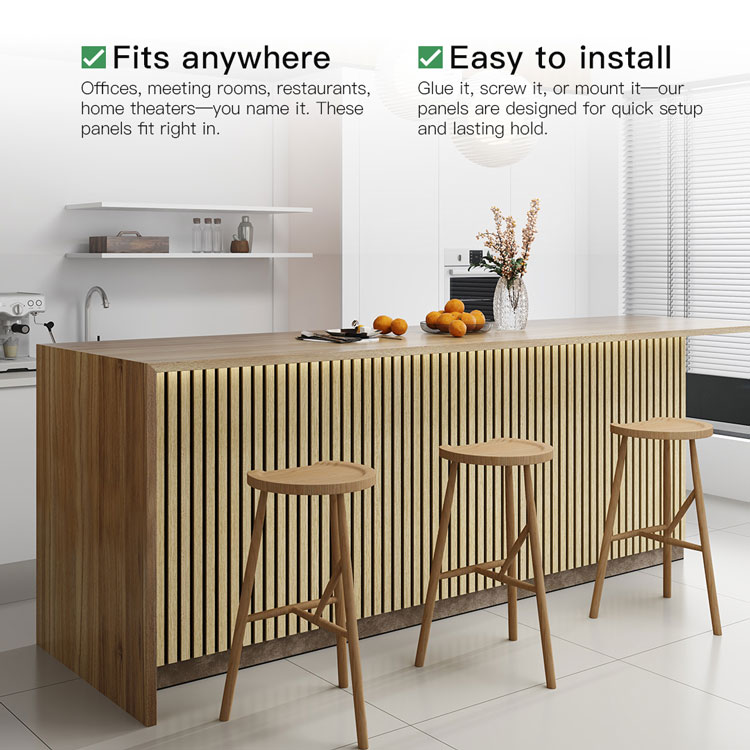
Jednym z najpopularniejszych rozwiązań jest obecnie panele akustyczne z listew drewnianych, które łączą dekoracyjne elementy drewniane z materiałami pochłaniającymi dźwięk.
Panele te zazwyczaj charakteryzują się:
Fornir naturalny lub listwy MDF
Podkład z filcu akustycznego
Zaprojektowane odstępy zapewniające lepszą absorpcję dźwięku
Ta konstrukcja pozwala im poprawić zarówno wygląd wizualny, jak i parametry akustyczne wnętrz.
Panele akustyczne z listwami drewnianymi są szeroko stosowane w:
Biura i sale konferencyjne
Hotele i restauracje
Wnętrza mieszkalne
Przestrzenie handlowe
Recepcje korporacyjne
Każde pomieszczenie ma unikalne właściwości akustyczne, wynikające z jego wielkości, kształtu, materiałów i sposobu użytkowania. Skuteczne rozwiązanie akustyczne wymaga starannego zaplanowania:
Umieszczenie panelu
Pokrycie powierzchni
Wybór materiałów
Połączenie rozwiązań akustycznych
Dzięki integracji paneli akustycznych z innymi rozwiązaniami dźwiękowymi możliwe jest stworzenie komfortowe i zrównoważone środowisko akustyczne który wspiera komunikację, produktywność i przyjemność.
Na Guangdong Leeyin Acoustics, specjalizujemy się w produkcji wysokiej jakości panele ścienne z listew drewnianych i panele akustyczne Zaprojektowane z myślą o nowoczesnych przestrzeniach architektonicznych.
Jako jeden z wiodących eksporterów paneli akustycznych z listew drewnianych w Chinach, dostarczamy produkty łączące w sobie doskonała akustyka i elegancki design wnętrza.
Nasze mocne strony to:
20 000 metrów kwadratowych nowoczesnych hal produkcyjnych
Zaawansowana technologia produkcji
Ścisłe zarządzanie jakością zgodne z międzynarodowymi standardami
Duża zdolność produkcyjna umożliwiająca realizację dużych zamówień globalnych
Bogate doświadczenie w obsłudze międzynarodowych dystrybutorów, projektantów i wykonawców
Nasze panele akustyczne z listew drewnianych są szeroko stosowane w budynki komercyjne, wnętrza mieszkalne, biura i projekty hotelarskie, zapewniając zarówno poprawę akustyki, jak i nowoczesną estetykę.
TAGI :

Tel / Whatsapp : +86 13902386325 / +86 13902386325
E-mail
:
export@gzliyin.com


© 2026 Guangdong Liyin Acoustics Technology Co., Ltd. Wszelkie prawa zastrzeżone.

Hi! Click one of our members below to chat on


